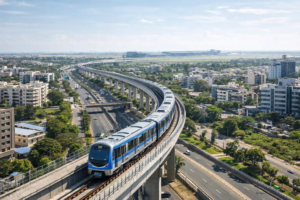
Of all the infrastructure developments that could transform Hennur Main Road’s residential desirability, the planned metro extension is the most consequential. The upcoming metro on Hennur Road impact on property values, rental demand and daily commuting experience is expected to be substantial — following the same pattern of appreciation that metro connectivity has generated along every Bangalore corridor it has reached. This article examines the current status of metro planning for the Hennur corridor, analyses the historical evidence for metro-driven property appreciation and explains what this means for buyers at Purva Codename Hennur.
The Metro Plan — Current Status for Hennur Road
The Bangalore metro expansion plans include provisions for extending rail connectivity into the northern corridors that are currently unserved by the existing Green and Purple lines. The Hennur Road metro station infrastructure — while still in the planning and approval stages — is anticipated to bring metro access within 3 to 4 kilometres of developments on Hennur Main Road.
The specific route alignment, station locations and construction timeline are subject to government approvals, funding allocations and engineering feasibility assessments that are still underway. What is clear from the consistent inclusion of the Hennur-North Bangalore corridor in metro expansion planning documents is that the intent to provide metro connectivity to this zone exists at the policy level — and the probability of eventual implementation is high given the corridor’s growing residential population and commercial significance.
For Purva Codename Hennur residents specifically, a metro station within 3 to 4 kilometres would provide a practical rail transit option that transforms the commuting equation — particularly for journeys to central Bangalore, the southern IT corridors and the airport zone, all of which would become significantly more accessible via metro-bus or metro-cab interchanges.
Metro Connectivity and Property Value — The Historical Evidence
The relationship between metro connectivity North Bangalore and property values is not theoretical — it is documented in Bangalore’s own real estate data. When the Namma Metro’s initial lines were commissioned, properties along the route experienced measurable appreciation that significantly exceeded the city average.
Along the Green Line, localities that were previously considered peripheral — including stretches of Kanakapura Road, Nagasandra and Peenya — were fundamentally repositioned in the residential market following metro station commissioning. Properties within 1 kilometre of metro stations experienced appreciation of 30 to 60 percent within three to five years of operational commencement. Even properties within a 2 to 5 kilometre radius saw meaningful price increases of 15 to 30 percent attributable to the improved perception and accessibility that metro proximity generates.
The metro effect property price mechanism operates through multiple channels. Direct accessibility improvement reduces commute times and expands the catchment of people who consider the area viable for daily living. Perception improvement elevates the area’s status from peripheral to connected, attracting a broader and more affluent buyer demographic. Commercial development around metro stations — retail, dining, services — enhances the neighbourhood’s self-sufficiency. And the permanence of metro infrastructure — unlike road improvements that can be reversed by traffic growth — provides an enduring connectivity guarantee that supports long-term value.
What Metro Connectivity Means for Hennur Main Road
For Hennur Main Road specifically, metro connectivity would address the corridor’s primary connectivity limitation — traffic congestion on the road itself and at the ORR junction. Currently, daily commuters depend entirely on road-based transport, which subjects them to the traffic variability that characterises Bangalore’s arterial roads. Metro connectivity provides a traffic-independent alternative that delivers consistent, predictable journey times regardless of road conditions.
The impact on rental demand would be particularly significant. Working professionals who prefer public transit — whether for convenience, cost or environmental reasons — would add to the tenant pool for Hennur Main Road apartments. Currently, the corridor’s rental market draws primarily from car-dependent professionals. Metro connectivity would expand this pool to include metro-commuting professionals, young singles and couples who may not own cars, and environmentally conscious tenants who prioritise public transit access.
For property investors at Purva Codename Hennur, the metro extension represents a significant upside catalyst that has not yet been priced into current property values. The pre-launch pricing at approximately INR 15,000 per sq ft reflects the corridor’s existing connectivity profile — which is already strong but road-dependent. When metro connectivity materialises, property values will adjust upward to reflect the enhanced accessibility, broader tenant appeal and improved area perception.
The Investment Timing Advantage
The most rewarding investment timing in any metro-impacted corridor is before the metro becomes operational — when the announcement and construction phases generate expectation but the full benefit has not yet materialised in pricing. Buyers who enter the market before metro completion capture the appreciation that occurs as the project moves from planning through construction to operations.
For Hennur Main Road, this timing advantage is currently available. The metro extension is in the planning stage, which means current property pricing does not yet reflect metro connectivity. Buyers at Purva Codename Hennur who enter during the pre-launch EOI phase are acquiring at a price base that will benefit from both the project-specific appreciation during construction and the area-level appreciation driven by metro arrival — a compounding return dynamic.
For a detailed analysis of how the metro will impact Hennur Road property prices from an investment perspective and the broader commute connectivity from Hennur to major IT hubs, explore our dedicated guides.
A Practical Recommendation for Buyers
The upcoming metro on Hennur Road impact should be viewed as a significant upside catalyst rather than a decision prerequisite. The Hennur corridor’s existing connectivity — ORR access, proximity to Manyata and Hebbal, road connections to the airport highway — already supports a strong residential proposition. The metro, when it arrives, will enhance an already good location rather than transforming a poor one.
Buyers should not defer their purchase decision indefinitely while waiting for metro construction to begin or complete. The appreciation that occurs during the anticipation and construction phases accrues to those who are already invested. Waiting for operational commencement means paying the appreciated price rather than capturing the appreciation.
To discuss how metro connectivity factors into your investment assessment, connect with our advisory team. Visit the location page for complete connectivity details.
FAQs
- How will the upcoming metro on Hennur Road impact property prices?
The upcoming metro on Hennur Road is expected to significantly improve property values by enhancing connectivity, reducing commute dependency on road traffic and increasing residential demand. Historically, Bangalore localities near metro corridors have witnessed strong appreciation once metro connectivity became operational.
- Will there be a Hennur Road metro station near residential projects?
Current metro expansion plans indicate that a Hennur Road metro station may come within approximately 3 to 4 kilometres of key residential developments in the corridor. This is expected to improve accessibility to central Bangalore, IT parks and the airport zone. - Why is metro connectivity important for North Bangalore real estate?
Metro connectivity in North Bangalore improves commuting convenience, attracts working professionals and enhances long-term infrastructure growth. Areas with metro access typically experience higher rental demand, stronger property appreciation and improved overall liveability.
- What is the metro effect on property prices in Bangalore?
The metro effect on property prices in Bangalore has historically been substantial. Residential areas located near operational metro lines have recorded appreciation ranging from 15 percent to 60 percent depending on proximity, infrastructure growth and commercial development around stations. - Is investing in Hennur Road before the metro becomes operational a good decision?
Investing in Hennur Road before metro completion can offer strong long-term potential because buyers enter at pre-appreciation pricing levels. As metro construction progresses and connectivity improves, both property demand and market value are expected to increase steadily.