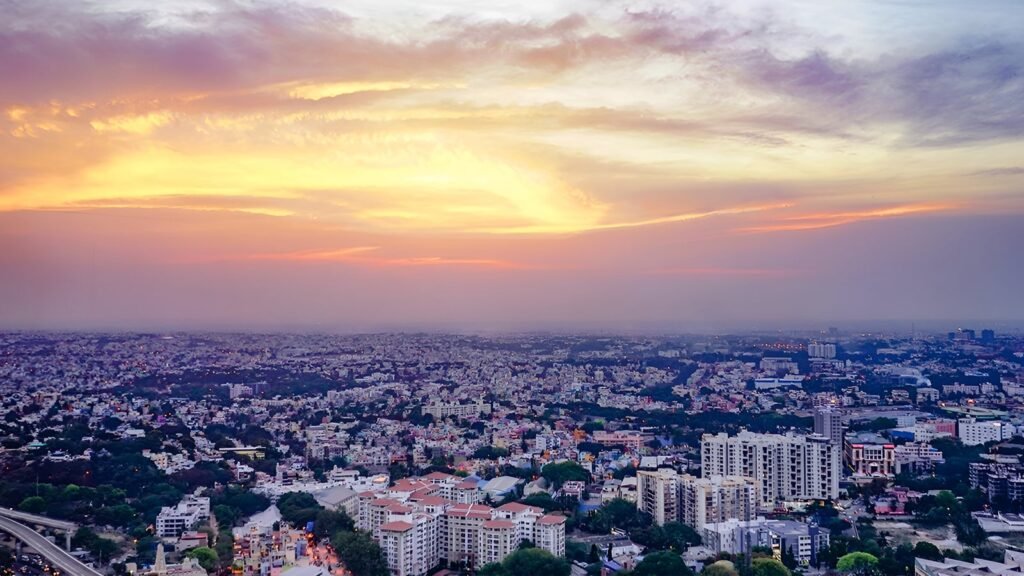
India’s Smart City Mission aims to transform urban areas through technology-enabled infrastructure, digital governance and sustainable development practices. For North Bangalore — a corridor that is simultaneously experiencing rapid residential growth, commercial expansion and infrastructure investment — smart city initiatives represent an additional layer of improvement that enhances livability, governance quality and property values. Understanding smart city initiatives North Bangalore helps buyers at Purva Codename Hennur appreciate the progressive improvement trajectory that will continue enhancing their corridor’s quality profile over the coming periods.
Smart City Projects in Bangalore — The Digital Infrastructure Layer
Smart city projects Bangalore encompass a range of technology-enabled improvements to urban infrastructure and services. These include high-speed digital connectivity infrastructure that provides reliable broadband across the city, intelligent traffic management systems that use sensors and data analytics to optimise traffic flow, smart utility management covering water supply, power distribution and waste management with real-time monitoring, digital civic services that enable online access to government services and property-related documentation, and environmental monitoring systems that track air quality and noise levels.
For residential real estate, these digital infrastructure investments improve the underlying livability of areas that benefit from early implementation. North Bangalore — as a relatively newer development corridor with modern road infrastructure and technology-forward residents — is well-positioned to be among the early beneficiaries of smart city technology deployment.
Urban Infrastructure Upgrade — Physical and Digital
The urban infrastructure upgrade that smart city initiatives drive extends beyond purely digital systems into physical infrastructure improvements that directly affect daily living quality. Smart street lighting that adjusts brightness based on pedestrian presence and time of day improves both safety and energy efficiency. Smart waste management with sensor-equipped collection systems improves neighbourhood cleanliness. Smart water management with leak detection and distribution optimisation improves utility reliability.
For Hennur Main Road residents, these improvements manifest as progressively better civic services, more reliable utilities, cleaner streetscapes and a general elevation of the urban environment quality. Each improvement, while individually modest, collectively creates a living context that becomes more convenient and pleasant over time.
The road widening currently underway on Hennur Main Road is itself incorporating smart infrastructure elements — modern drainage, upgraded street lighting, improved signal systems — that reflect smart city principles applied to the corridor’s physical transformation.
Civic Development in North Bangalore
The broader civic development North Bangalore trajectory encompasses not just technology systems but the general improvement of governance, services and community infrastructure that makes a corridor more livable and desirable.
New civic facilities — community centres, libraries, sports complexes, parks — add to the social infrastructure available to residents. Improved waste management reduces the environmental degradation that characterises some older urban areas. Better street maintenance — pothole repair, drainage cleaning, tree management — improves the daily commute experience and the visual character of the corridor.
For property values, civic development operates as a gradual but persistent appreciation driver. Corridors with improving civic quality attract more affluent residents, more premium commercial tenants and more infrastructure investment — creating a positive cycle where improvement generates demand and demand generates further improvement.
What Smart City Development Means for Property Values
The relationship between smart city initiatives and property values is supportive but long-term. Smart city improvements unfold over years and decades rather than creating immediate value events. However, the cumulative effect of progressively better digital infrastructure, civic services, utility reliability and urban management creates a general quality improvement that supports steady appreciation above the city average.
For buyers at Purva Codename Hennur, smart city initiatives represent one more layer within the multi-factor appreciation thesis. Employment growth drives demand. Infrastructure projects enhance connectivity. Government policy provides regulatory protection. And smart city development progressively improves the civic quality of the broader corridor environment.
The combination of these factors — each operating on different timelines but all trending in the same positive direction — creates a sustained appreciation environment for well-located properties on Hennur Main Road.
For the government policies supporting real estate and the upcoming infrastructure projects near Hennur Road, explore our dedicated guides.
To discuss how smart city development enhances your investment outlook, connect with our advisory team.
FAQs
- What are smart city initiatives in North Bangalore?
Smart city initiatives North Bangalore include digital infrastructure, smart traffic systems, upgraded utilities and technology-enabled civic services. - How do smart city projects improve residential areas?
Smart city projects improve connectivity, utility management, cleanliness, public safety and overall urban livability for residents. - Why is North Bangalore important for smart city development?
North Bangalore is a major growth corridor with expanding residential communities, commercial hubs and ongoing infrastructure investment. - How do smart city initiatives affect property values?
Smart city improvements enhance civic quality, infrastructure reliability and area desirability, supporting long-term property appreciation. - What infrastructure upgrades are happening on Hennur Main Road?
Hennur Main Road is witnessing road widening, better drainage systems, upgraded street lighting and improved traffic management infrastructure.