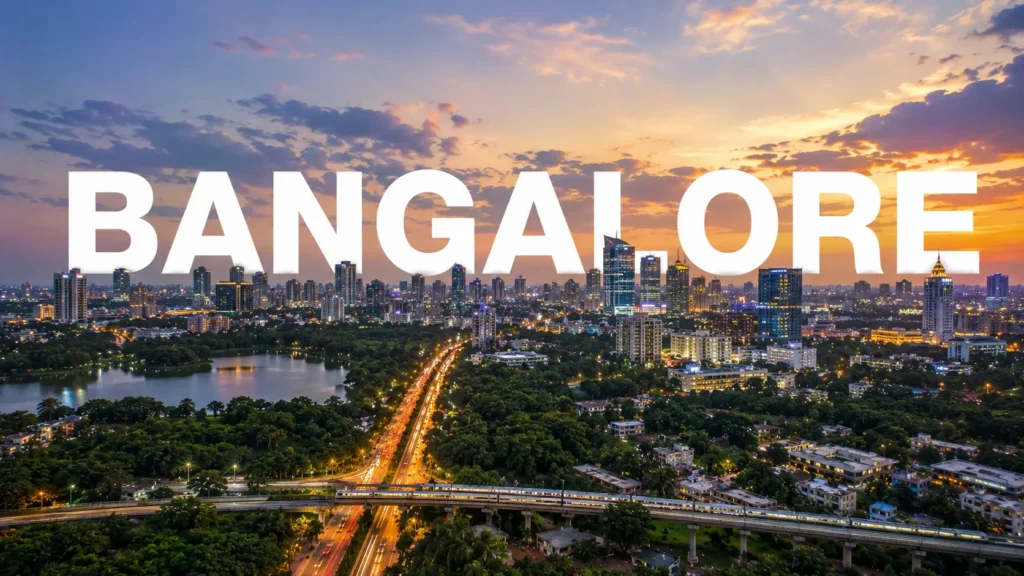
Bangalore is not merely India’s technology capital — it is one of Asia’s most dynamic urban economies, attracting talent, investment and residential demand at a pace that has consistently exceeded projections for over two decades. For buyers evaluating luxury apartments on Hennur Main Road, understanding the Bangalore real estate growth drivers provides the macro context that validates micro-level purchase decisions. The city’s growth is not accidental or temporary — it is structural, diversified and self-reinforcing in ways that support sustained residential demand and property value appreciation.
Why Bangalore Property Demand Remains Strong
The why Bangalore property demand question has a multi-layered answer rooted in the city’s unique economic position within India.
Bangalore hosts the largest concentration of technology companies in India — from global giants to homegrown unicorns to early-stage startups. This technology ecosystem employs millions of professionals at compensation levels that significantly exceed the national average, creating a massive and growing population with the financial capacity to purchase premium residential properties. Every year, new technology companies establish operations, existing companies expand their workforce and career progression raises individual incomes into the luxury apartment buying bracket.
Beyond technology, Bangalore’s economy is diversifying into aerospace and defence manufacturing, biotechnology and pharmaceuticals, financial services, higher education and research and creative industries. This diversification means that the city’s residential demand is not dependent on a single sector — a slowdown in one industry is typically offset by growth in another, creating demand resilience across economic cycles.
The city’s climate — moderate temperatures year-round without the extreme heat of Delhi, the humidity of Mumbai or the flooding risk of Chennai — adds a quality-of-life dimension that attracts professionals who have the choice of where to locate within India. This climate advantage is a permanent structural factor that will continue attracting migration indefinitely.
City Expansion and Infrastructure Development
The city expansion Bangalore trajectory is creating new residential corridors that extend the city’s livable geography. What was Bangalore’s urban boundary a decade ago has expanded substantially through road infrastructure, metro development, commercial campus construction and residential community development.
The northern corridor — encompassing Hennur Main Road, Hebbal, Thanisandra, Yelahanka and the airport zone — represents the most active expansion axis currently. The concentration of infrastructure investment in the north — road widening, metro extension, flyover construction, commercial park development — is creating a residential quality profile that matches or exceeds established zones while offering pricing that still reflects growth potential.
For buyers at Purva Codename Hennur, this expansion trajectory positions their investment within one of the city’s most active growth corridors. The 5.8-kilometre proximity to Manyata Tech Park, the ORR connectivity and the planned metro access place the project at the intersection of established employment connectivity and improving infrastructure — exactly the combination that generates the strongest property appreciation.
Urban Growth and Real Estate Fundamentals
The connection between urban growth real estate value creation operates through a simple but powerful mechanism. As a city grows economically, it attracts more professionals. More professionals need more housing. More housing demand — particularly in the premium segment — supports property values and rental rates. And the improving urban infrastructure that enables economic growth simultaneously enhances residential livability, attracting yet more residents and supporting yet higher property values.
Bangalore’s urban growth is particularly supportive of luxury residential real estate because the city’s employment profile skews toward high-income knowledge workers. Unlike manufacturing-driven cities where employment growth generates demand primarily in the affordable and mid-segment, Bangalore’s technology-driven employment generates demand in the premium and luxury segments where individual purchasing power is substantially higher.
The implications for Hennur Main Road are direct. The corridor benefits from Bangalore’s aggregate economic growth through the employment expansion at Manyata Tech Park and surrounding commercial developments. It benefits from infrastructure investment through the road widening, metro planning and junction improvements that are enhancing connectivity. And it benefits from the demographic expansion that brings new affluent professionals into the North Bangalore residential market with each hiring cycle.
What Makes Bangalore Different from Other Indian Cities
Bangalore’s sustained residential demand growth distinguishes it from other Indian cities in several ways. The employment quality — predominantly knowledge-economy jobs at above-average compensation — creates a buyer demographic with both the income and the aspiration for luxury living. The relatively young demographic — with a median age significantly below the national average — means that the city’s home-buying population is in its prime purchasing years and will continue buying for decades. The cosmopolitan character — with professionals from across India and overseas — creates demand for modern, specification-rich residential products rather than traditional housing designs.
These factors collectively mean that Bangalore’s luxury residential market has stronger, more sustained demand fundamentals than most other Indian cities. For investors at Purva Codename Hennur, this means that the city-level macro dynamics support the property-level micro investment thesis throughout the holding period.
For the specific IT ecosystem impact on housing demand and the broader North Bangalore growth corridor context, explore our dedicated analyses.
To discuss how Bangalore’s growth story supports your investment at Purva Codename Hennur, connect with our advisory team.
FAQs
- What are the main Bangalore real estate growth drivers?
Key growth drivers include the IT sector, infrastructure expansion, metro connectivity, airport development and rising demand for premium housing. - Why does Bangalore property demand remain strong?
Bangalore attracts high-income professionals through its technology ecosystem, diversified economy and strong employment opportunities. - How does infrastructure development affect Bangalore real estate?
Road widening, metro expansion, flyovers and commercial growth improve connectivity and increase residential property demand and appreciation. - Why is North Bangalore considered a high-growth corridor?
North Bangalore benefits from airport proximity, tech parks, infrastructure upgrades and large-scale residential and commercial development. - How does urban growth support luxury apartment demand?
Economic growth attracts affluent professionals, increasing demand for premium apartments with modern amenities and strong connectivity.