Understanding apartment sizes requires more nuance than simply reading the headline square footage. The way a developer measures and communicates apartment area — whether as carpet area, built-up area or super built-up area — significantly affects the actual living space you receive. This guide provides comprehensive Purva Codename Hennur unit size details across all three configurations, explains the critical distinction between measurement methodologies and helps you evaluate whether the space on offer genuinely meets your family’s needs.
The Three Configurations and Their Approximate Sizes
Purva Codename Hennur offers three configurations that span a meaningful size range. The standard 3 BHK measures approximately 2,000 sq ft. The 3 BHK with staff room measures approximately 2,400 sq ft. And the 4 BHK with staff room measures approximately 2,700 sq ft.
These figures, as communicated during the pre-launch phase, represent approximate saleable or super built-up areas. The actual carpet area — the usable floor space within your apartment walls excluding common areas, wall thickness and utility ducts — will be lower than these headline figures. Understanding this distinction is critical for evaluating whether the apartment genuinely provides the living space your family requires.
Carpet Area vs Super Built-Up — What You Need to Know
The carpet area vs super built-up distinction is one of the most commonly misunderstood aspects of apartment purchasing in India. RERA has mandated that all sales be conducted based on carpet area — the net usable area within the apartment, measured from the inner face of the walls. This is the area you can actually furnish and live in.
Super built-up area includes the carpet area plus a proportionate share of common areas — lobbies, staircases, elevator shafts, clubhouse proportionate share, security rooms and other shared infrastructure. The ratio between carpet area and super built-up area is commonly called the loading factor, and in luxury developments it typically ranges from 25 to 35 percent. This means that a 2000 sq ft 3 BHK quoted as super built-up area may have a carpet area of approximately 1,400 to 1,500 sq ft.
At Purva Codename Hennur, with only four apartments per floor per wing and a single tower with two wings, the common area proportionate allocation per unit is influenced by the number of homes sharing those common facilities. In a low-density project with 192 units, the common area infrastructure — lobbies, lift shafts, corridor space — is shared among fewer homes than in high-density alternatives, which can affect the loading factor positively for residents in terms of the generosity of shared spaces, though it may result in a higher proportionate allocation in area calculations.
Buyers should request the exact RERA carpet area figures for each configuration once RERA registration is obtained. These figures represent the legally binding measurement that will appear in your Agreement for Sale and will determine what you are contractually entitled to receive.
Apartment Dimensions on Hennur Road — How It Compares
When evaluating apartment dimensions Hennur Road across competing projects, the size comparison must be conducted on a like-for-like basis — either all carpet area or all super built-up area. Comparing one project’s carpet area against another’s super built-up area produces misleading conclusions.
At approximately 2,000 sq ft super built-up for the standard 3 BHK, Purva Codename Hennur is positioned at the upper end of the Hennur corridor luxury market where most 3 BHK apartments range from 1,400 to 1,800 sq ft. The size advantage is meaningful because it translates into larger rooms, wider living areas and more generous balcony proportions than competing offerings.
However, the size comparison alone does not capture the volumetric advantage that Purva Codename Hennur provides through its 10-foot clear ceiling heights. A room of identical floor area feels significantly more spacious with a 10-foot ceiling than with a standard 9-foot ceiling. The additional one foot of vertical space creates a sense of openness, grandeur and breathing room that adds approximately 10 percent to the perceived volume of every room without adding to the measured floor area. This is a genuine spatial advantage that most competing projects on Hennur Road do not offer.
How Size Translates into Furniture and Living Functionality
The true test of apartment size is not the square footage number but whether the rooms accommodate your furniture comfortably and support your daily living patterns without spatial compromise.
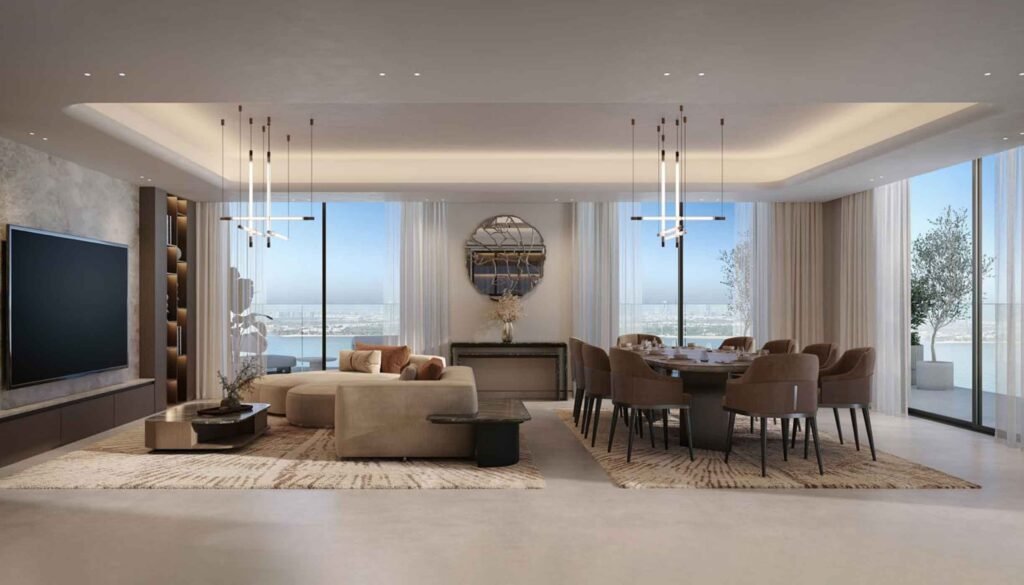
A living room in the 2000 sq ft 3 BHK at Purva Codename Hennur should comfortably accommodate a full-size sofa set, a dining table for six, a console or entertainment unit and circulation space without feeling cramped. The master bedroom should accommodate a king-size bed, nightstands, a dresser and a pathway to the walk-in wardrobe and ensuite bathroom without requiring furniture to be pushed against walls. And the dual balconies should be deep enough to place a small table and chairs for outdoor seating — functioning as an extension of your living space rather than merely a narrow ledge for drying clothes.
These functionality benchmarks are more meaningful than abstract square footage figures. During your evaluation, ask the advisory team for furniture layout plans that show standard furniture pieces placed within the room dimensions. This visual representation immediately reveals whether the apartment’s proportions work for real living rather than existing only as impressive numbers on a brochure.
Size and Investment Value
From an investment perspective, the relationship between apartment size and value is influenced by the target market for each configuration. The 3 BHK at approximately 2,000 sq ft targets the broadest buyer and tenant pool — working professionals, small families and couples who represent the largest demand segment in the luxury rental market. Its more accessible price point of INR 3.00 Crore and broader market appeal typically translate into shorter vacancy periods and easier tenant sourcing.
The 4 BHK with staff room at approximately 2,700 sq ft targets a more select demographic — senior executives, business families and joint family arrangements. While this segment pays premium rent in absolute terms, the market is smaller and more selective, which can result in longer search periods between tenants.
For a detailed comparison of the investment characteristics of each configuration and an understanding of the low-density design that contextualises these sizes within the project’s broader design philosophy, explore our dedicated articles.
To review detailed floor plans and unit layouts for each configuration, connect with our advisory team. Visit the floor plan page for visual representations.
FAQs
- What are the apartment sizes available at Purva Codename Hennur?
Purva Codename Hennur offers approximately 2,000 sq ft 3 BHK, 2,400 sq ft 3 BHK with staff room, and 2,700 sq ft 4 BHK with staff room configurations. - What is the difference between carpet area and super built-up area?
Carpet area is the actual usable space inside the apartment, while super built-up area includes a proportionate share of common spaces like lobbies, lifts, and corridors. - Is the 2000 sq ft 3 BHK spacious enough for families?
Yes, the 2000 sq ft 3 BHK at Purva Codename Hennur is designed with large living areas, spacious bedrooms, dual balconies, and functional layouts suited for modern families. - How do Purva Codename Hennur apartment dimensions compare to other Hennur Road projects?
The project offers larger apartment dimensions than many luxury developments on Hennur Road, along with 10-foot ceiling heights for enhanced spaciousness. - Why is carpet area important when buying an apartment?
Carpet area determines the actual livable space inside your home and is the legally recognised measurement under RERA for property transactions.